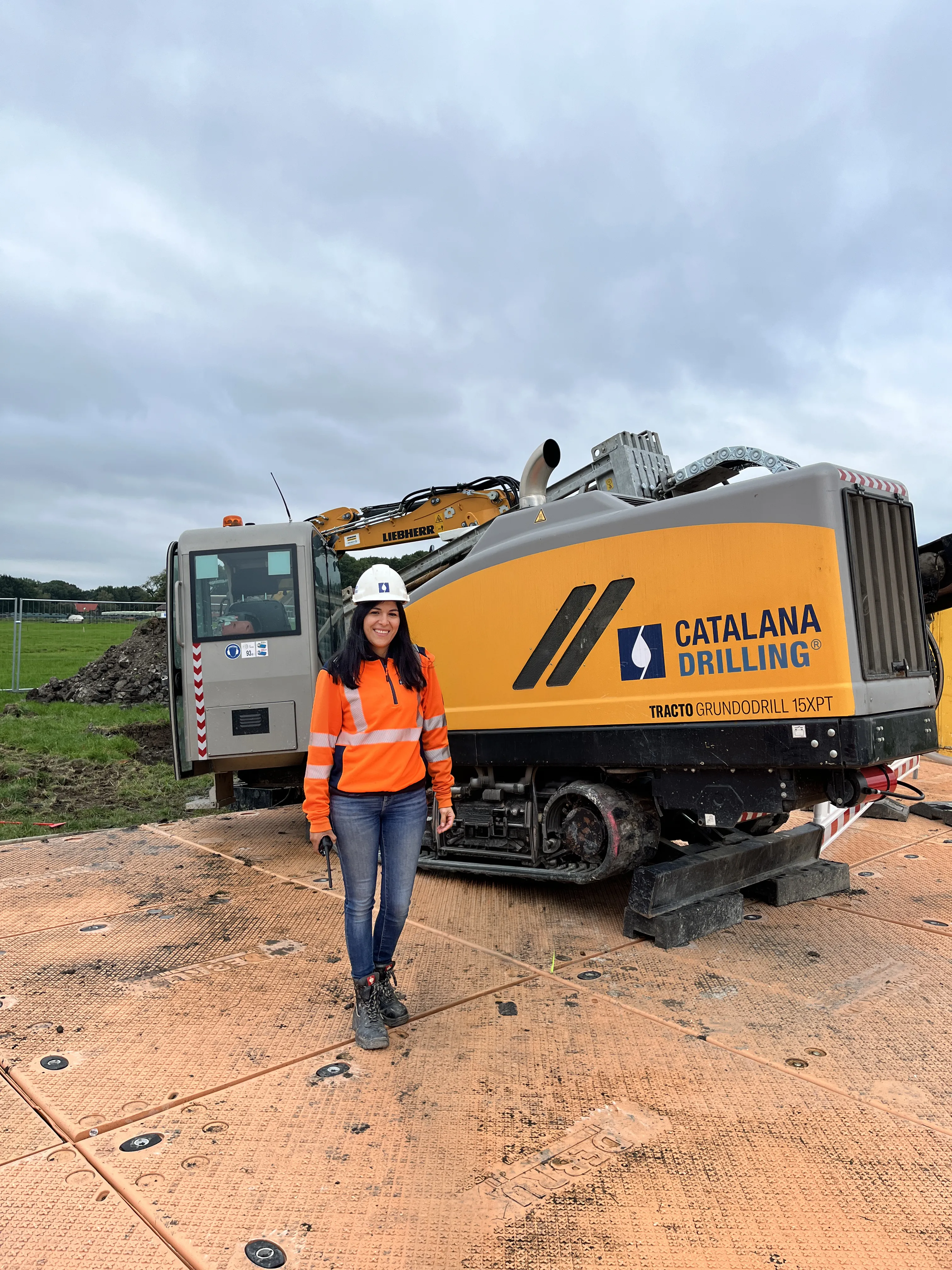
Wind turbines, cows and a drilling rig every 500 metres. Along a stretch of less than five kilometres, four different HDD crews are working on TenneT’s ambitious BalWin project. With SiteTec units running at five locations, there was only one thing to do: get in the car and head for Oldenburg.
BalWin and LanWin for green energy
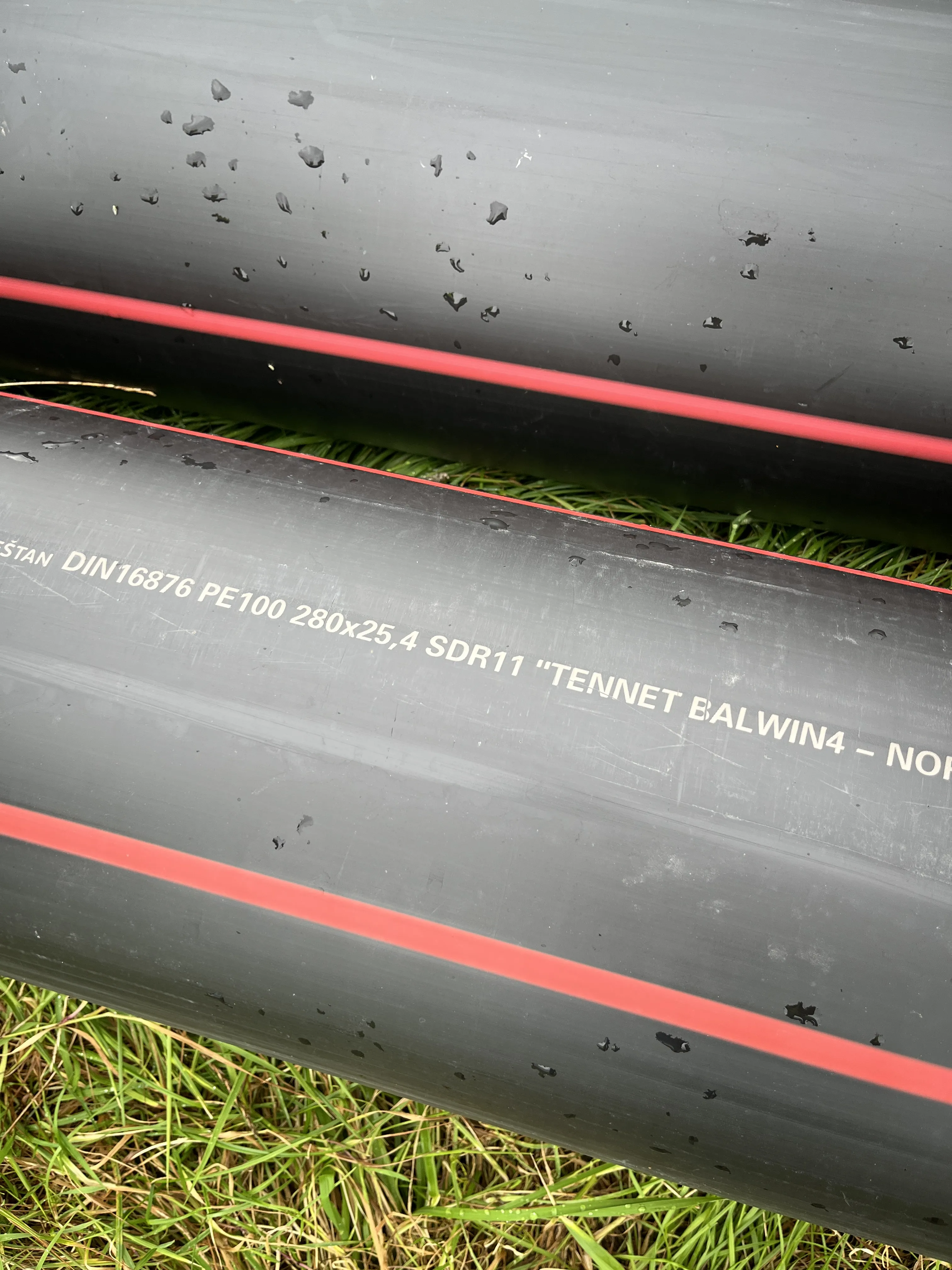
In northern Germany, major new energy infrastructure is taking shape. For TenneT, BalWin 4, LanWin 1 and LanWin 5 are among the projects now being developed. Three 525 kV HVDC connections that will bring offshore wind power from the German North Sea into the onshore transmission grid. Each has a capacity of 2 GW. The names sound more technical than they are. BalWin stands for BaltrumWind and LanWin for LangeoogWind, referring to two East Frisian islands. Each cable system has an offshore and an onshore section. As part of a consortium, Belgian contractor Denys is responsible for the onshore installation.
Why HDD instead of open trenches?
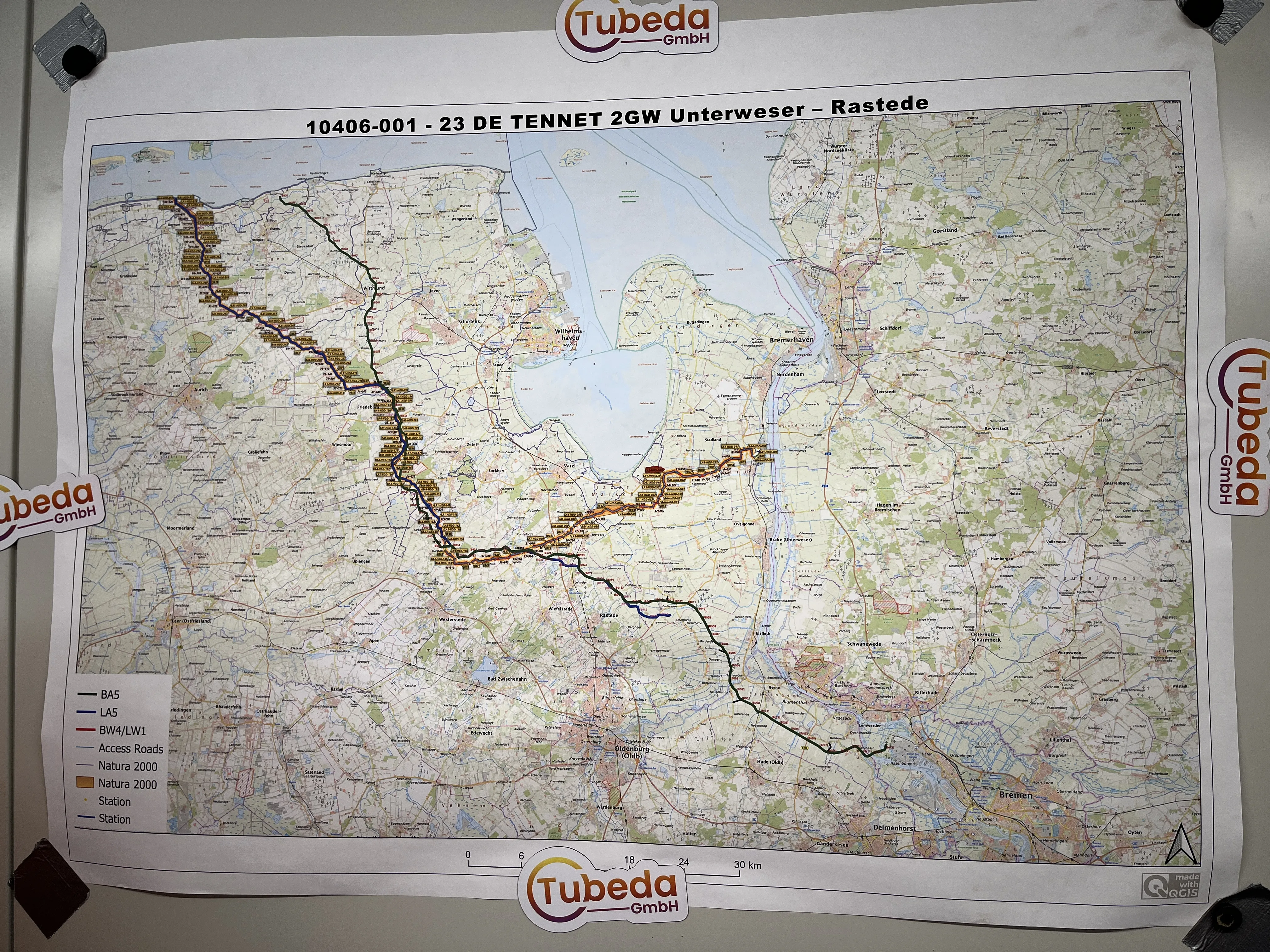
“Just look at the map. We are talking about a very large route here.” Aron van den Dooren pulls up a chair in the temporary site office and points to the line winding its way through northern Germany. He needs little encouragement. The Denys project manager is keen to talk about the work, share ideas and explain how they are tackling it.
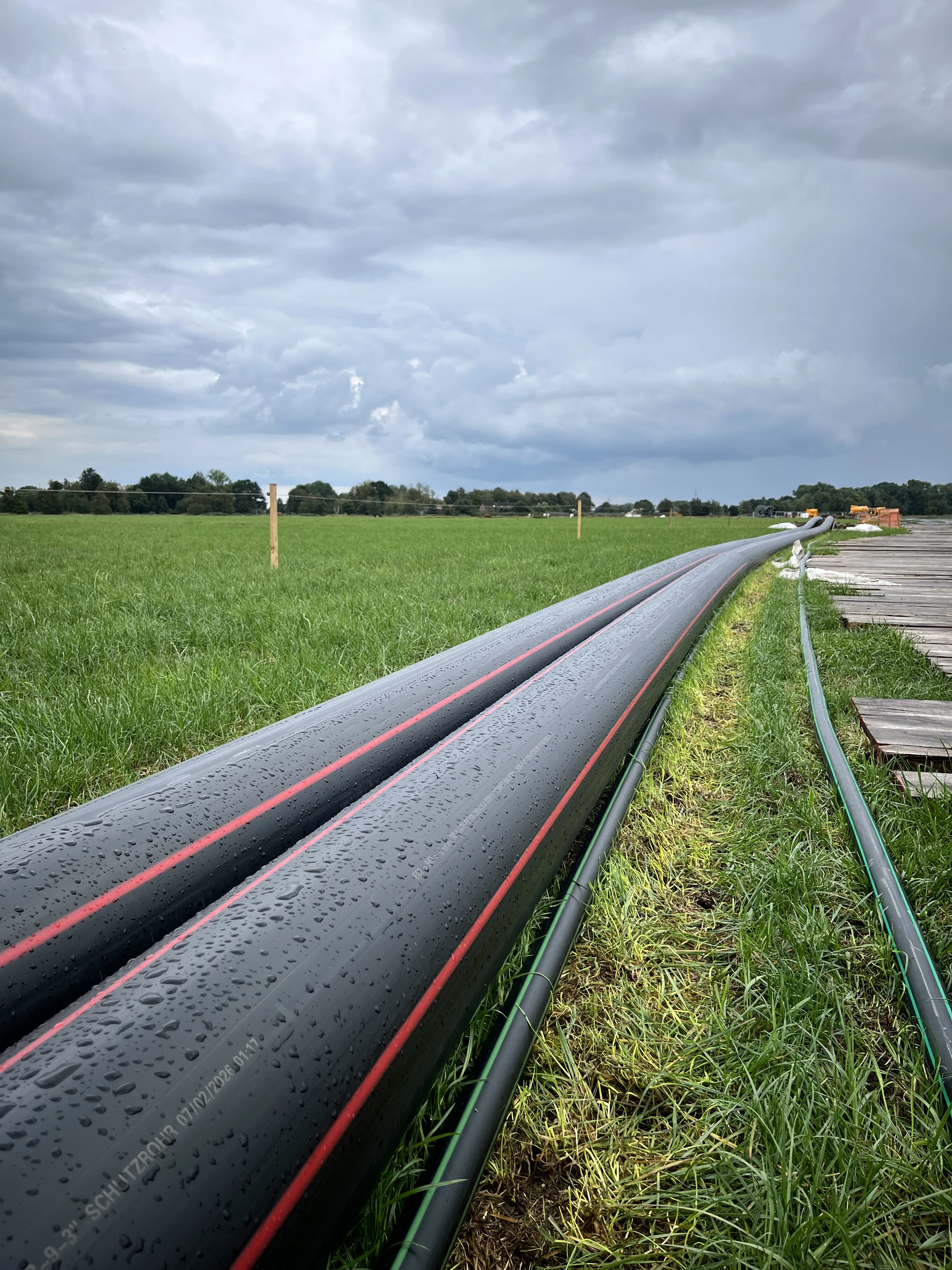
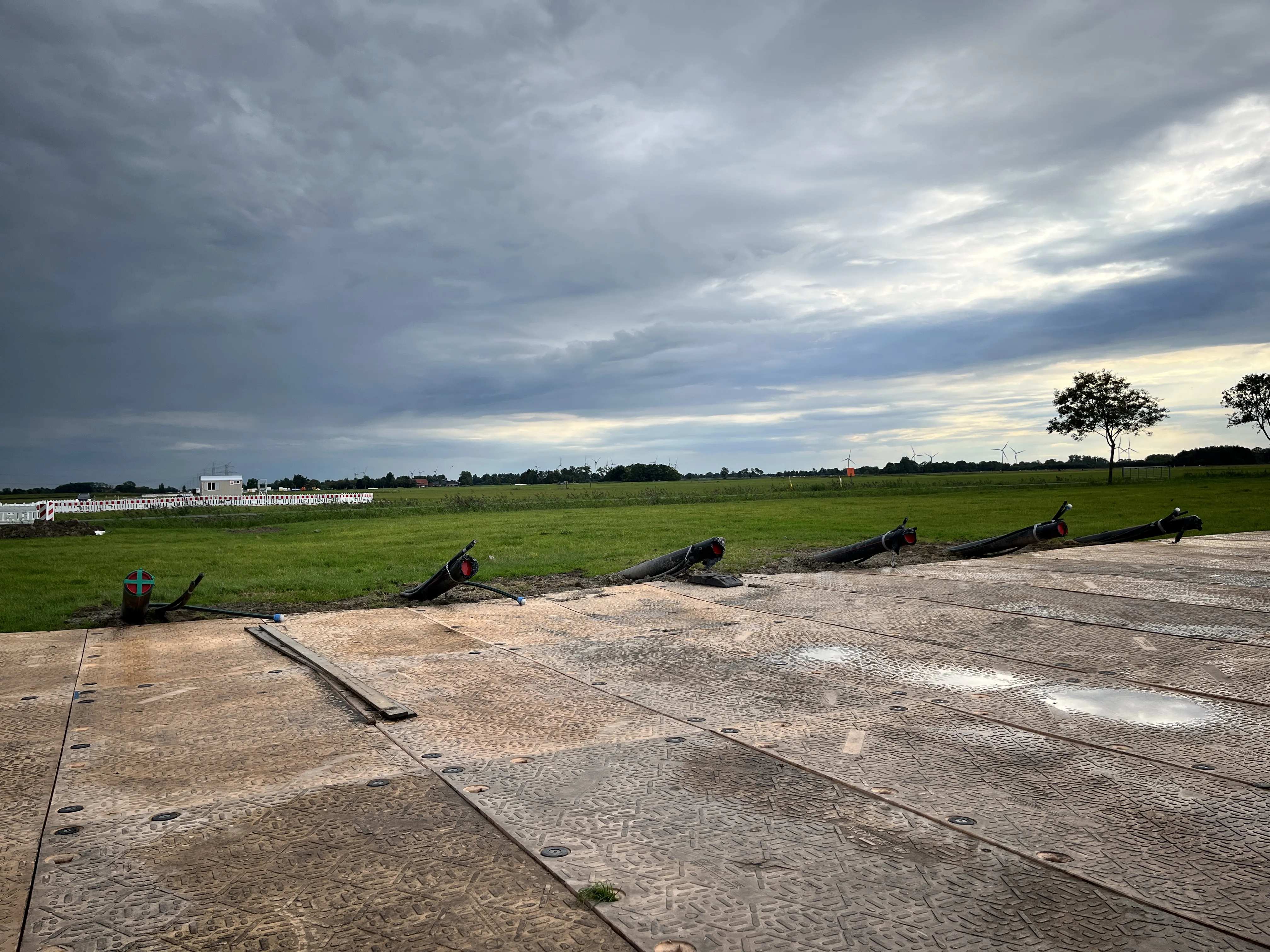
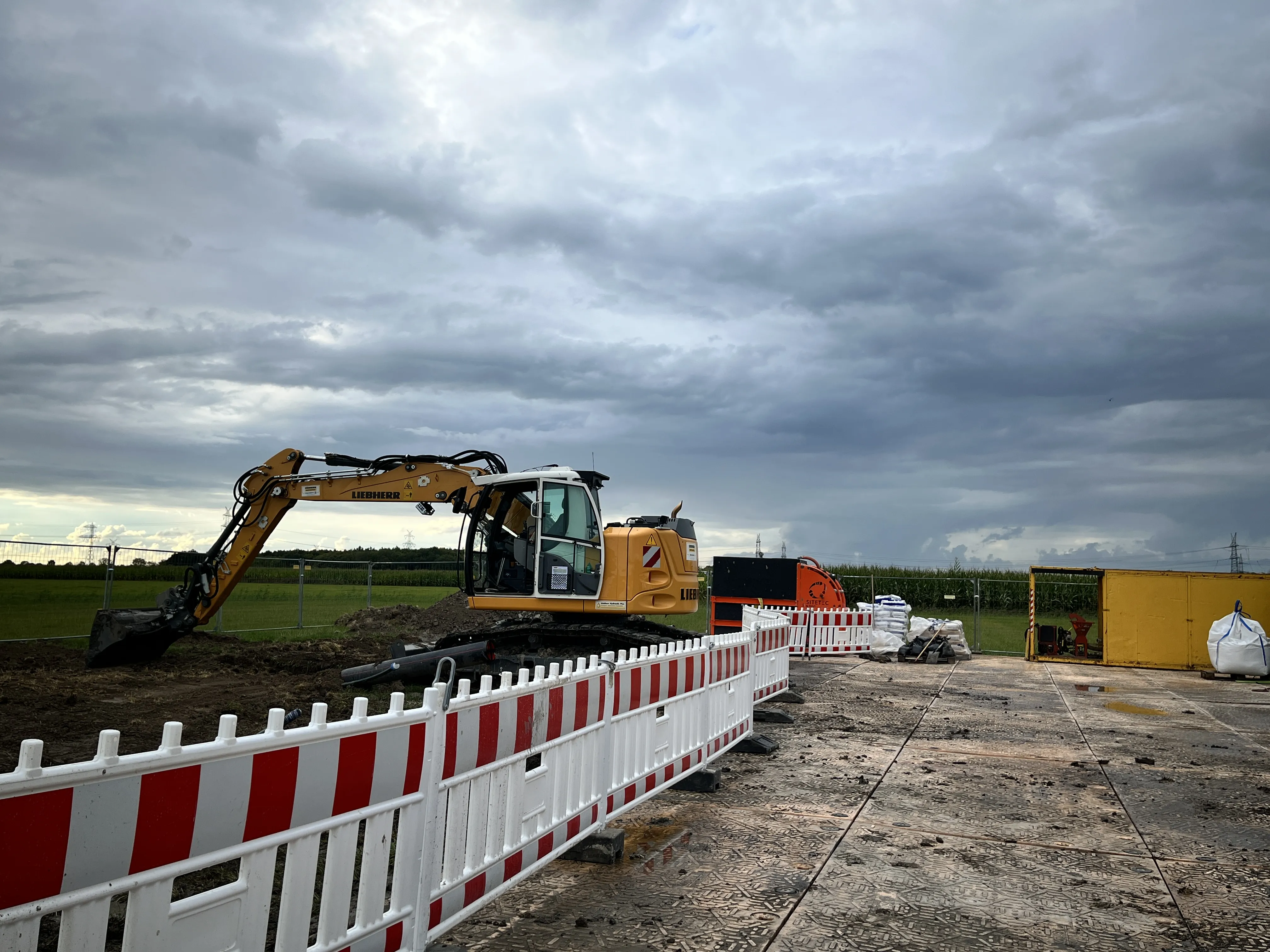
“Along this section of BalWin 4, several drilling crews, including Catalana, EHB and RTM, are working for Denys at sites close to one another. At each location, they drill six parallel bores for two connections running side by side. Each connection consists of three separate conductors, with a dedicated crossing for each one. The bores are typically between 100 and 300 metres long,” Aron explains.
So why drill over such short distances? He points to the map again. Ditches, waterways, roads, dykes and sensitive areas repeatedly cross what otherwise looks like fairly open landscape. The ground also plays a major role. Around Oldenburg and Rastede, wet peat and marshy soils are common, often with a high groundwater table. Open excavation can therefore require extensive drainage and dewatering. For HDD, however, that soft ground has an advantage. “The bores go quite quickly here. On average, we complete one crossing in around three days.”
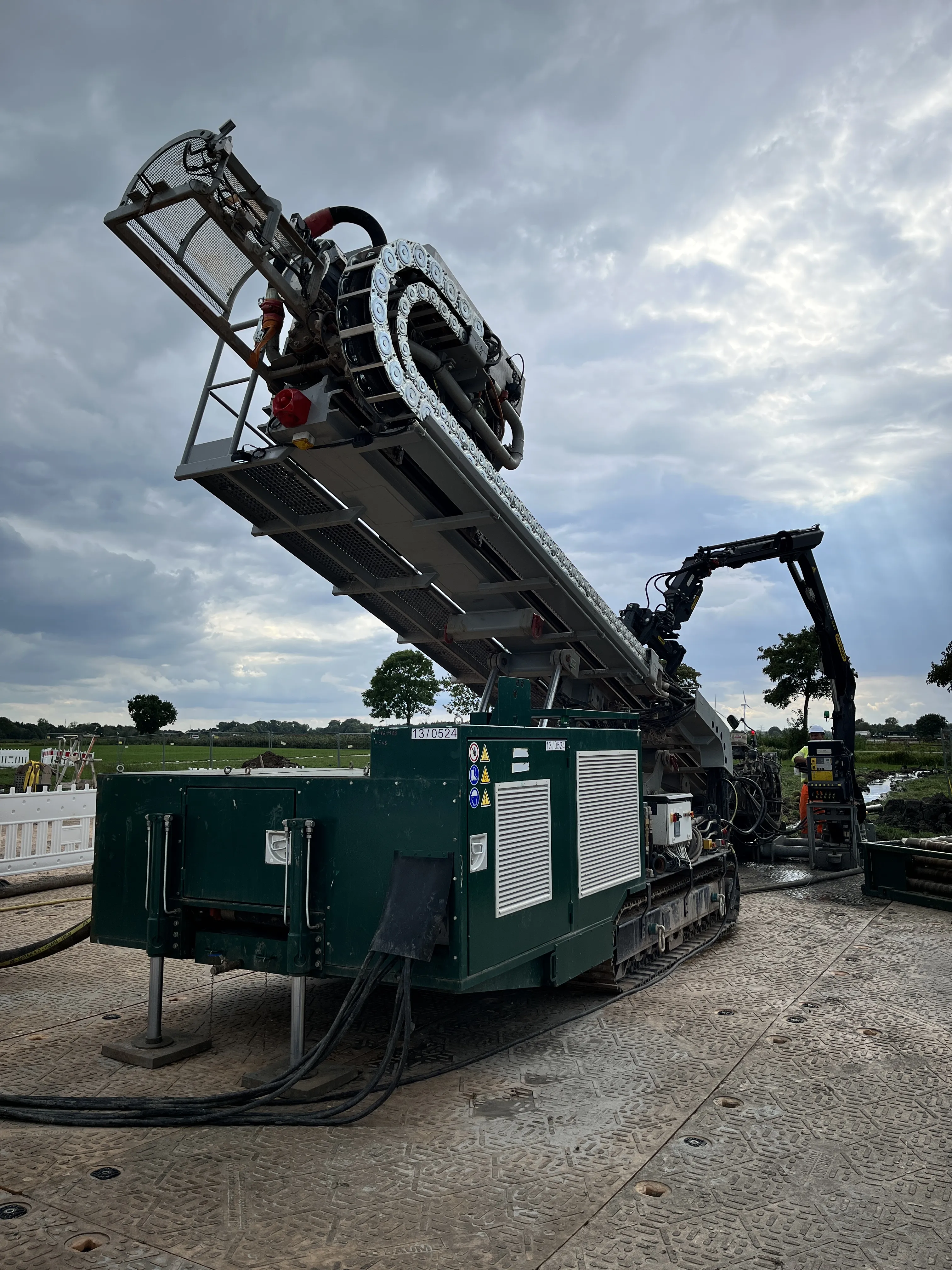
Denys’ Herrenknecht HK45 and M2000E
HDD is nothing new to Denys. The company has used the technique in its infrastructure projects for many years, but only two years ago set up its own HDD team with its own drilling equipment. In 2024, the new division invested in two fully electric Herrenknecht rigs. “We can now carry out part of the drilling ourselves,” Aron explains. “Our rig has 45 tonnes of pullback capacity.”
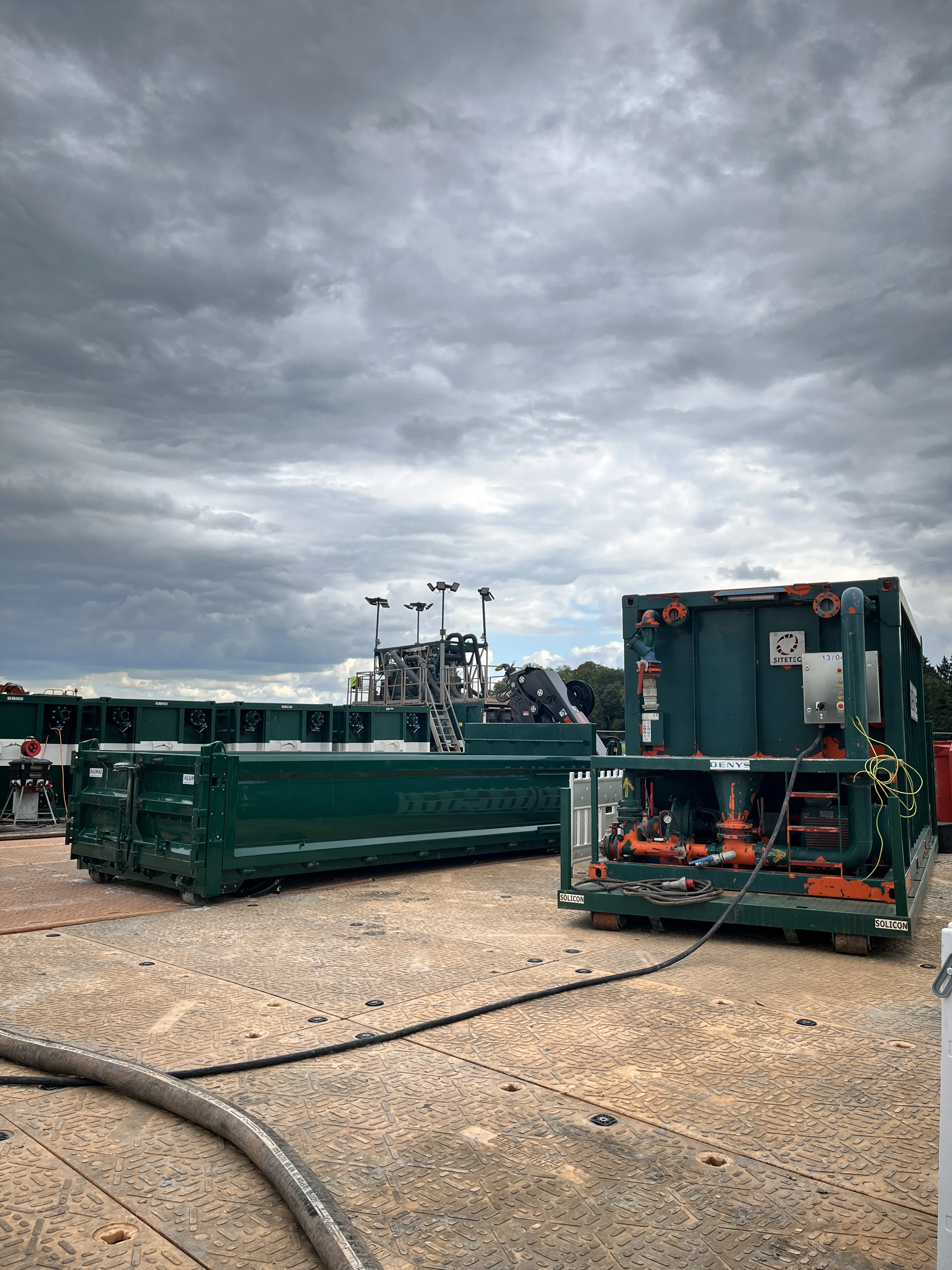
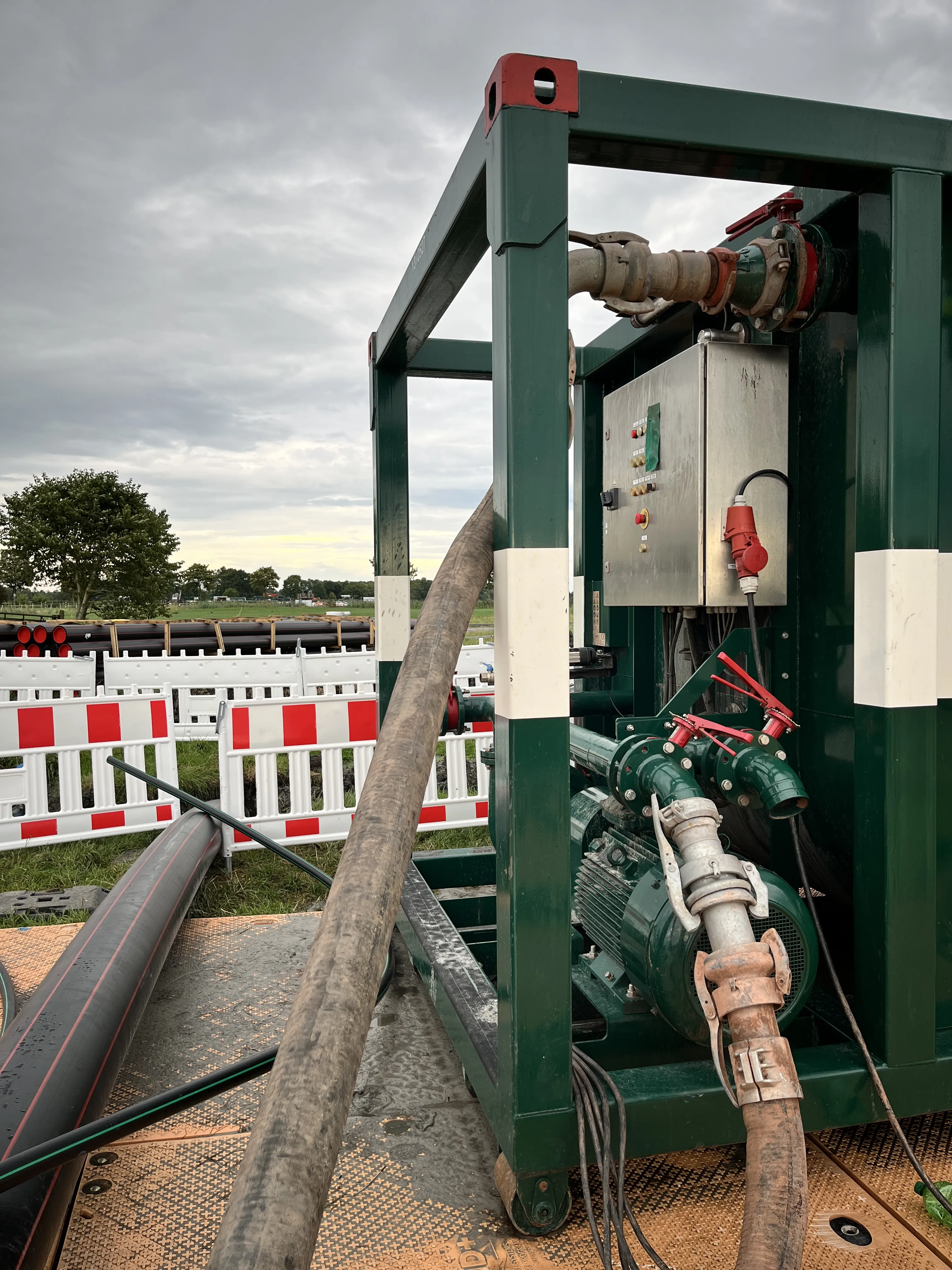
Denys also invested in the mud equipment needed to keep moving from one crossing to the next. This includes a M2000E that originally came from SiteTec’s rental fleet. Here and there, the original orange paint is starting to show through beneath the green. “Well, this one has certainly done some hours.”
Next to the mixing system, Denys runs a Gardner Denver pump fitted with valves supplied by SiteTec. “They are holding up well. We have completed several bores with around two per cent sand, and you can hardly see any wear on the valves.”
From fibre optics to 525 kV cable projects
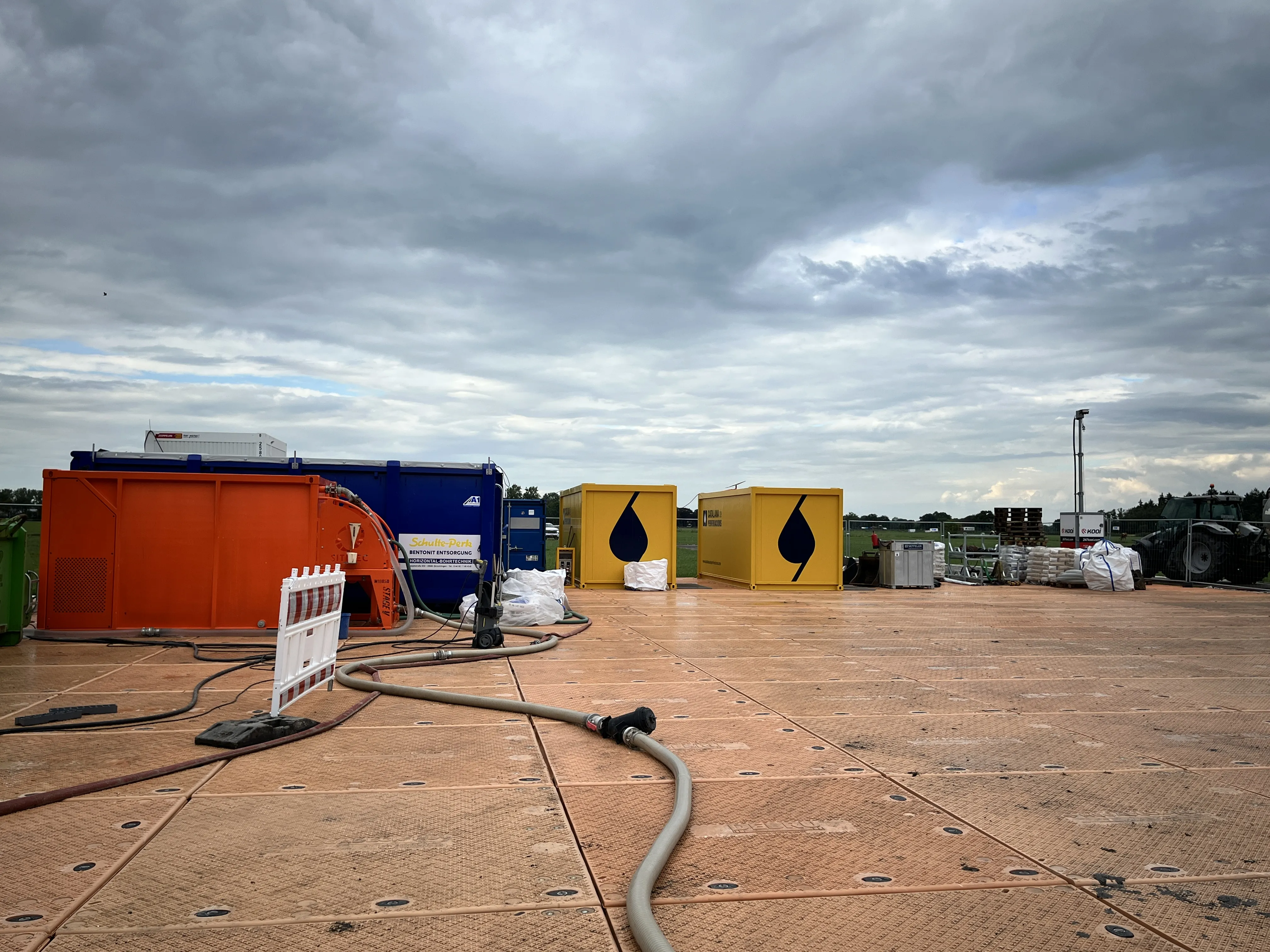
A few hundred metres further on, another warm welcome awaits us, this time from Catalana Drilling’s Spanish-speaking crew. Project manager Alba Romero shows us around. Catalana has been active in Germany for some time, but until recently mainly worked on smaller projects. TenneT’s major energy infrastructure projects have brought a different scale. “My first experience with HDD was on fibre-optic installations,” Alba explains. “Here, we need much more capacity. That also meant we needed larger mixing units than the ones we had ourselves.”
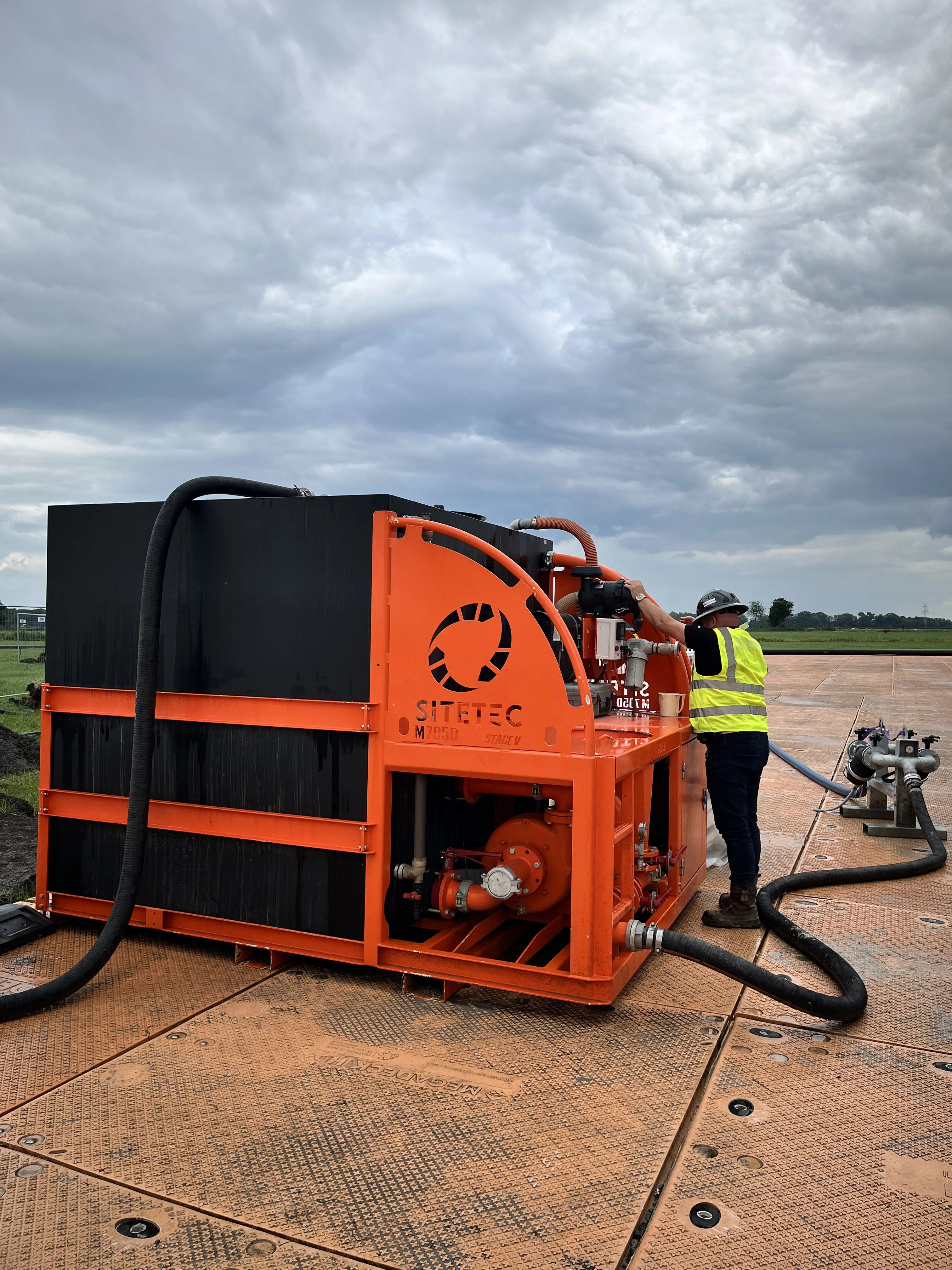
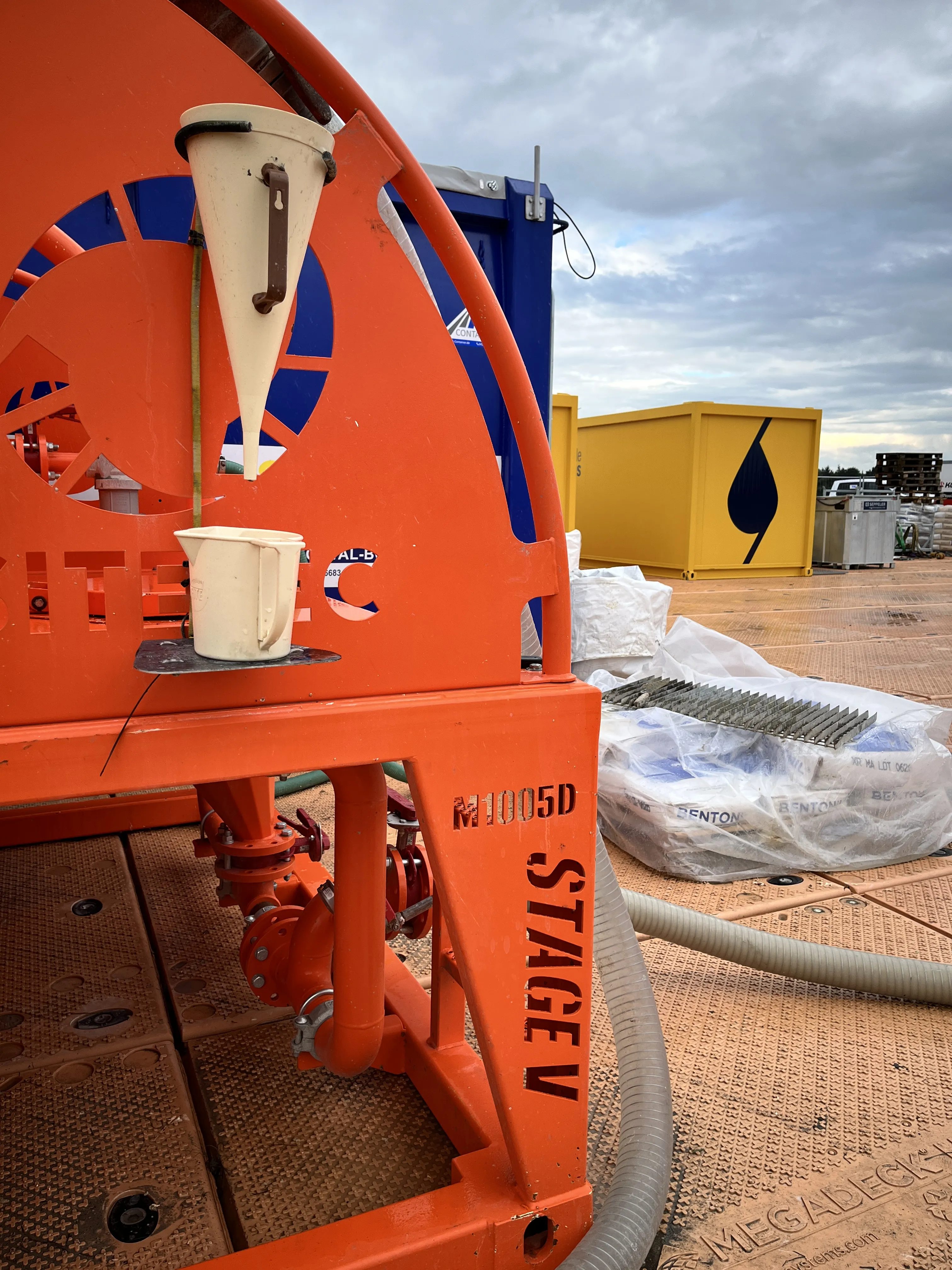
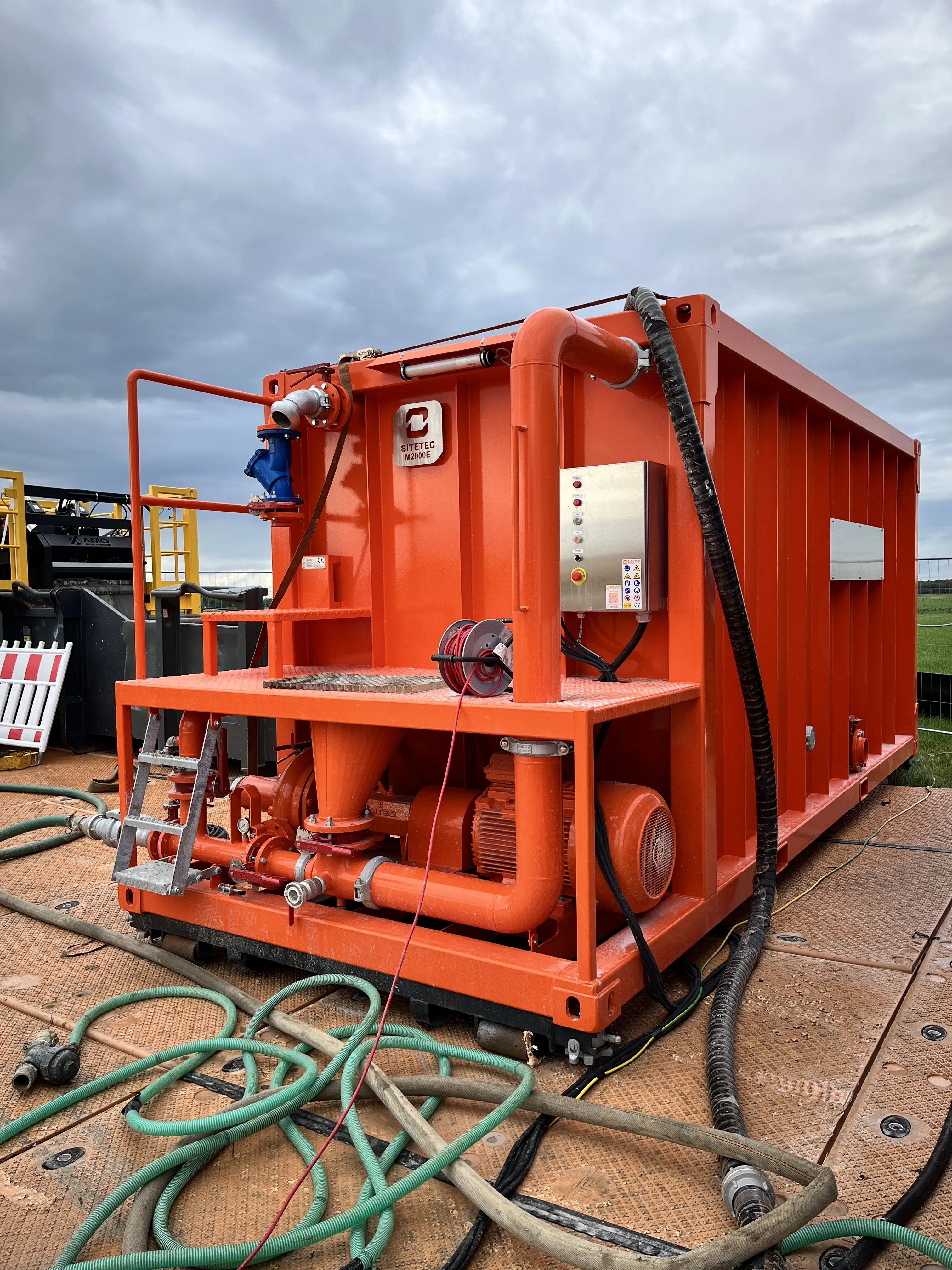
The day before, we met her brother Hernan a few kilometres down the route. Following in his sister’s footsteps, he also works as a project manager for the same company. His crew is running a SiteTec M2000E and M705D, while Alba’s team is working with an M1005D. During our visit, a JCB technician is working alongside them on the diesel engine that powers the machine, going through the settings and operating procedure. With some Spanish translation along the way, they quickly get everything sorted.
Today, the M1005D is being prepared for grout that will be placed around the cable ducts. The grout fills the space around the ducts, supports them in the soft ground and helps control the thermal conditions around the future 525 kV cables.
Theory versus practice
Alba is a civil engineer by training and sees every day how different theory and practice can be. “You can calculate and estimate in advance what you expect to find, but only out on the jobsite you see what is really in the ground. That is why I would rather be here than sitting in an office.” She also stays close to the work because of the strict monitoring. Groundwater, drilling fluids and environmental requirements are closely controlled in this area, with inspection drones regularly flying over the site. “If questions come up, I want to know exactly what is happening out here. I am glad to be working with such an experienced crew.”
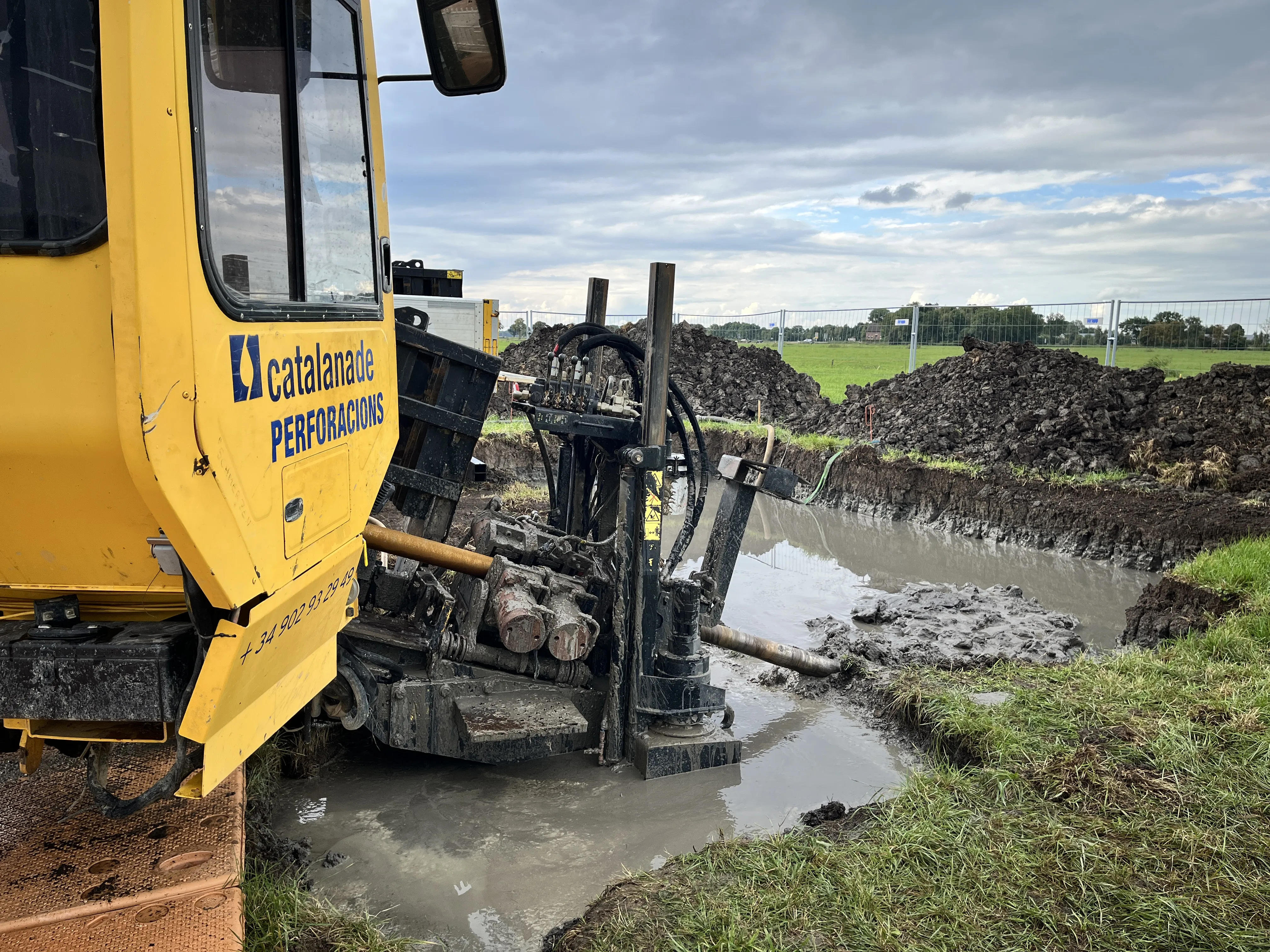
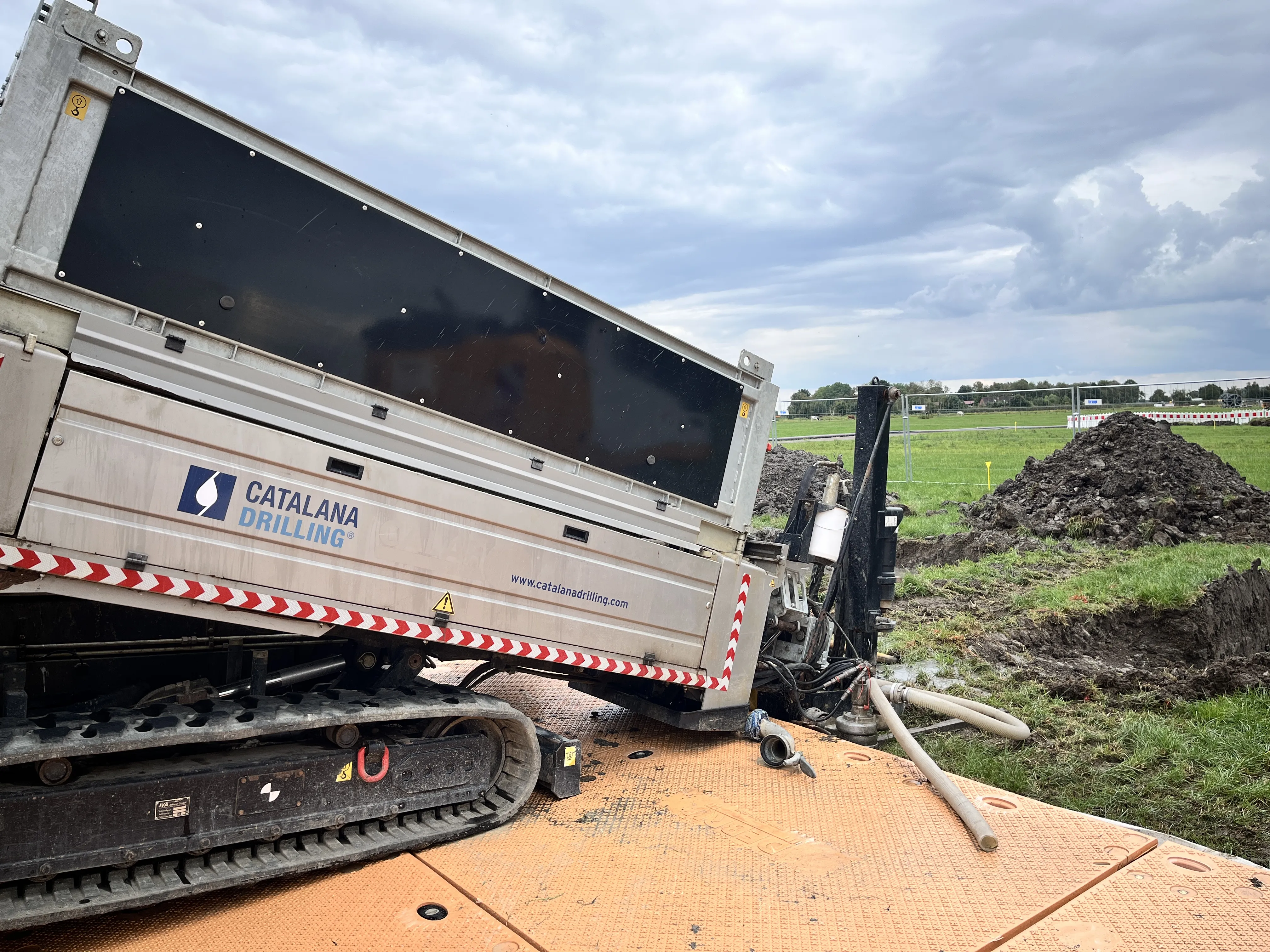
One of those crew members is Dani. He has worked in HDD for twelve years, on projects in several countries. “We have been through all sorts of situations. In Haiti, I even had to stop work and get out when an uprising suddenly broke out.” The challenge in Oldenburg is very different. “The bores are relatively short, but still need to reach sufficient depth within that limited distance. Getting the radius right took some figuring out,” Dani shares with us. “You need to get deep enough over a short distance while still staying on your bore path. That is why we had to incline the rig to achieve the entry angle we needed.”
When the buffer tank also handles the return flow
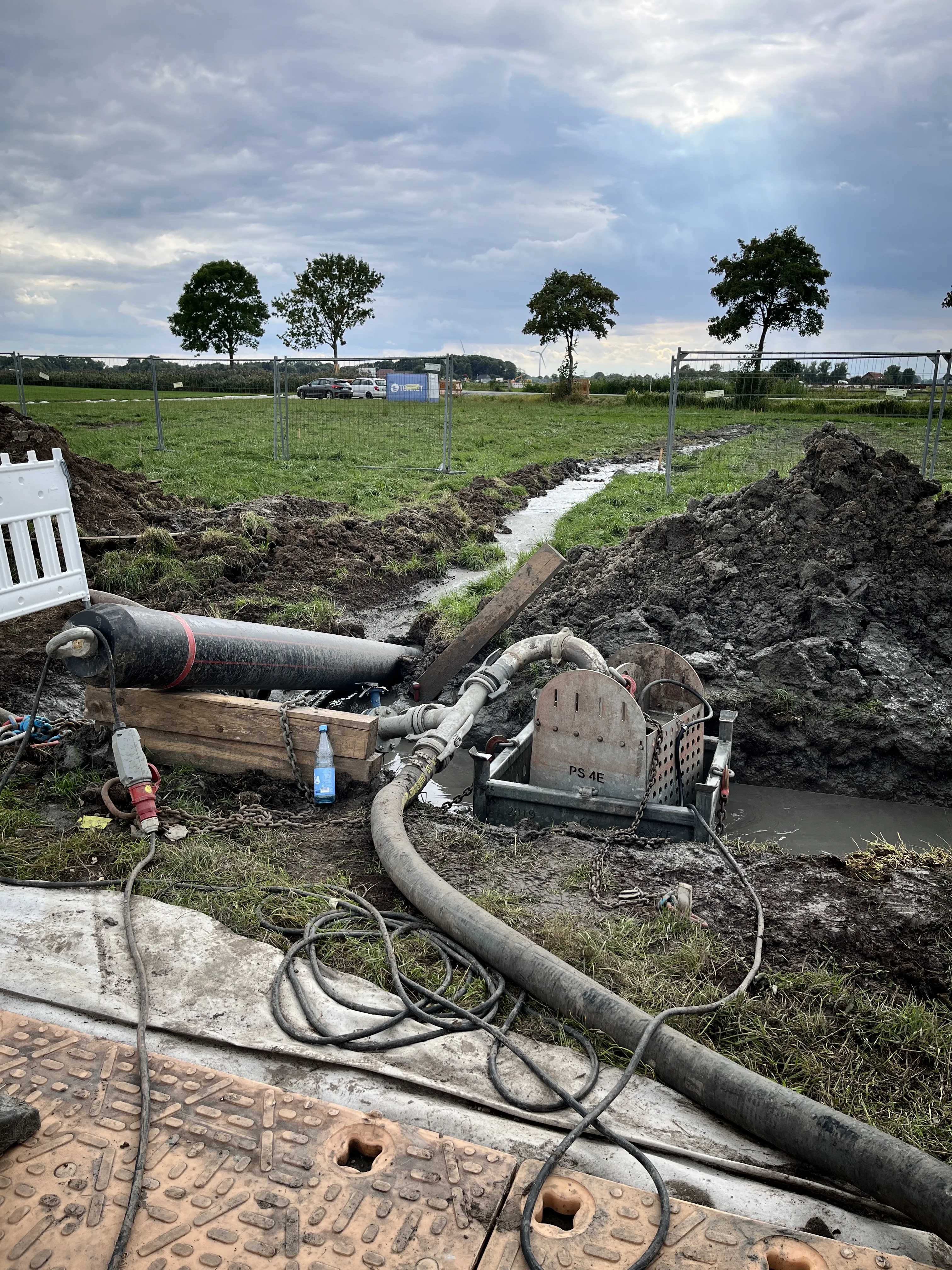
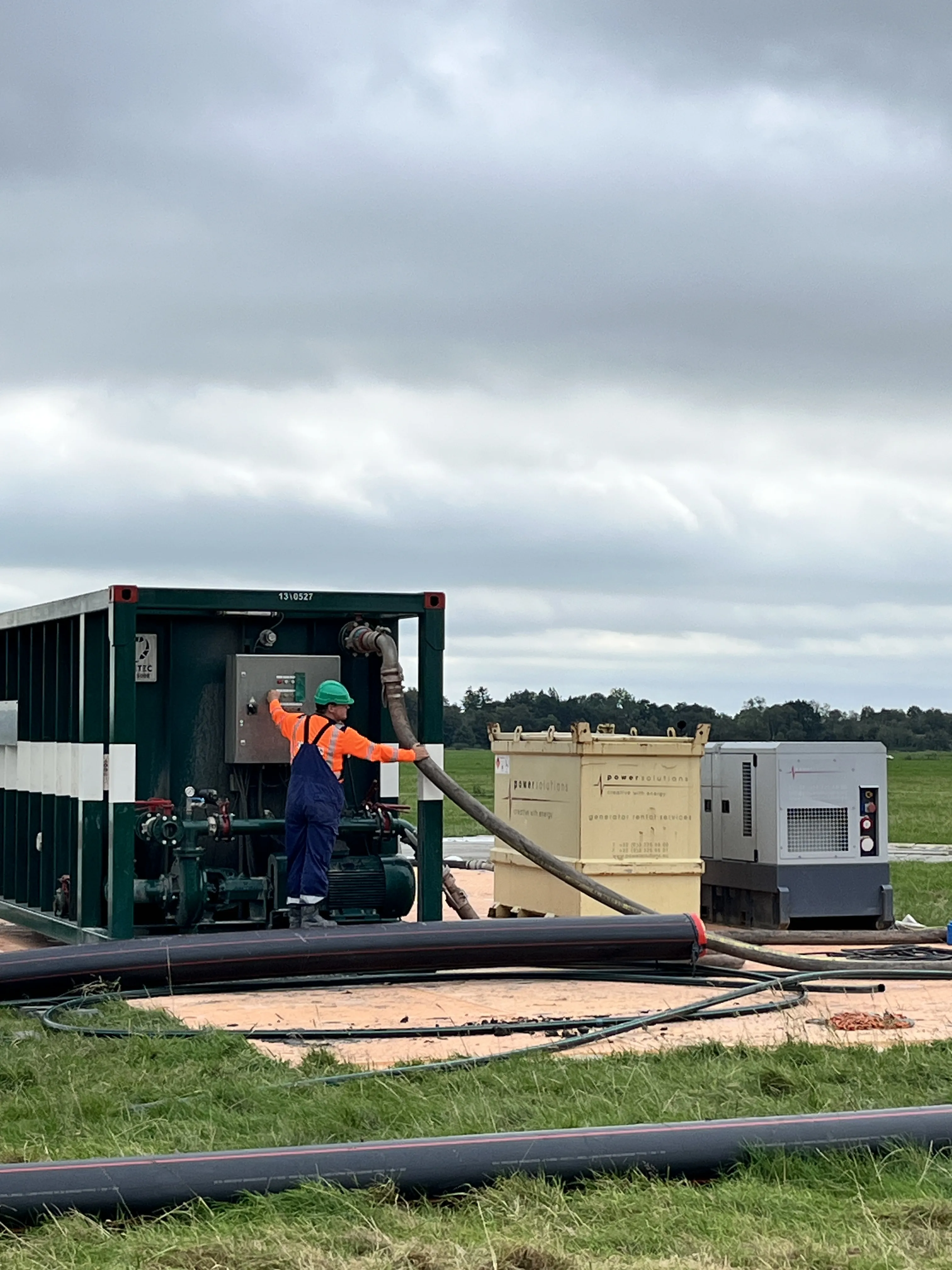
As we say goodbye to Alba and her crew and head back towards the road, we run into Aron again, this time next to his SiteTec PST1500 while another Denys crew is pulling in the cables. Aron is using the PST1500 in a way we had not seen before. Normally, it acts as a buffer for dirty drilling fluid on the pipe side. Its built-in pump keeps the fluid circulating in the tank, while a separate pump sends it through the return line to the recycling unit on the rig side. Here, they have cut out that extra pump. The PST1500’s built-in pump handles both jobs: circulating the fluid in the tank and pumping it all the way back to the recycling unit. It has more than enough capacity to cover the distance.
More than the machines
Seeing five SiteTec units working along one route is, of course, good to see. But what stood out just as much was how well the different crews had their jobsites organised. The setups looked sharp and they clearly knew their equipment. For us, those conversations in the field are just as valuable as seeing the machines at work.
A big thank you to the teams of Denys and Catalana for the warm welcome, the open conversations and for taking the time to show us around.