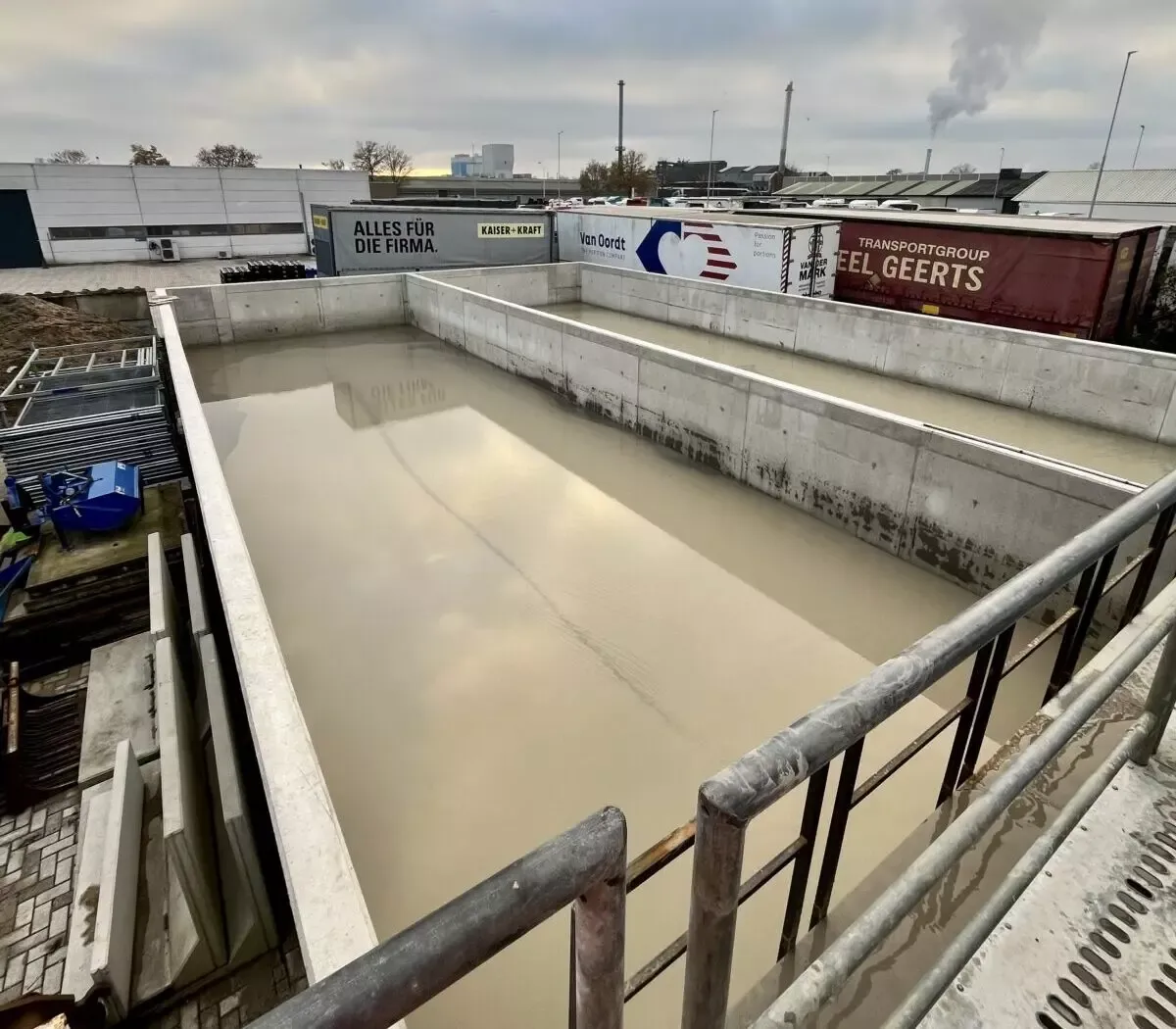
As you enter their site, you immediately notice the smell of wet sand and the constant hum of machines. On an industrial zone along the River Waal near Nijmegen, we visit Transpose Recycling. A new player in the HDD sector, fully focused on cleaning and re-using drilling fluid for and on behalf of third parties. The initiative addresses a question that is becoming increasingly urgent across the industry: what do you do with used drilling fluid, and how do you keep the process technically sound, financially manageable and environmentally responsible?
Born at the kitchen table
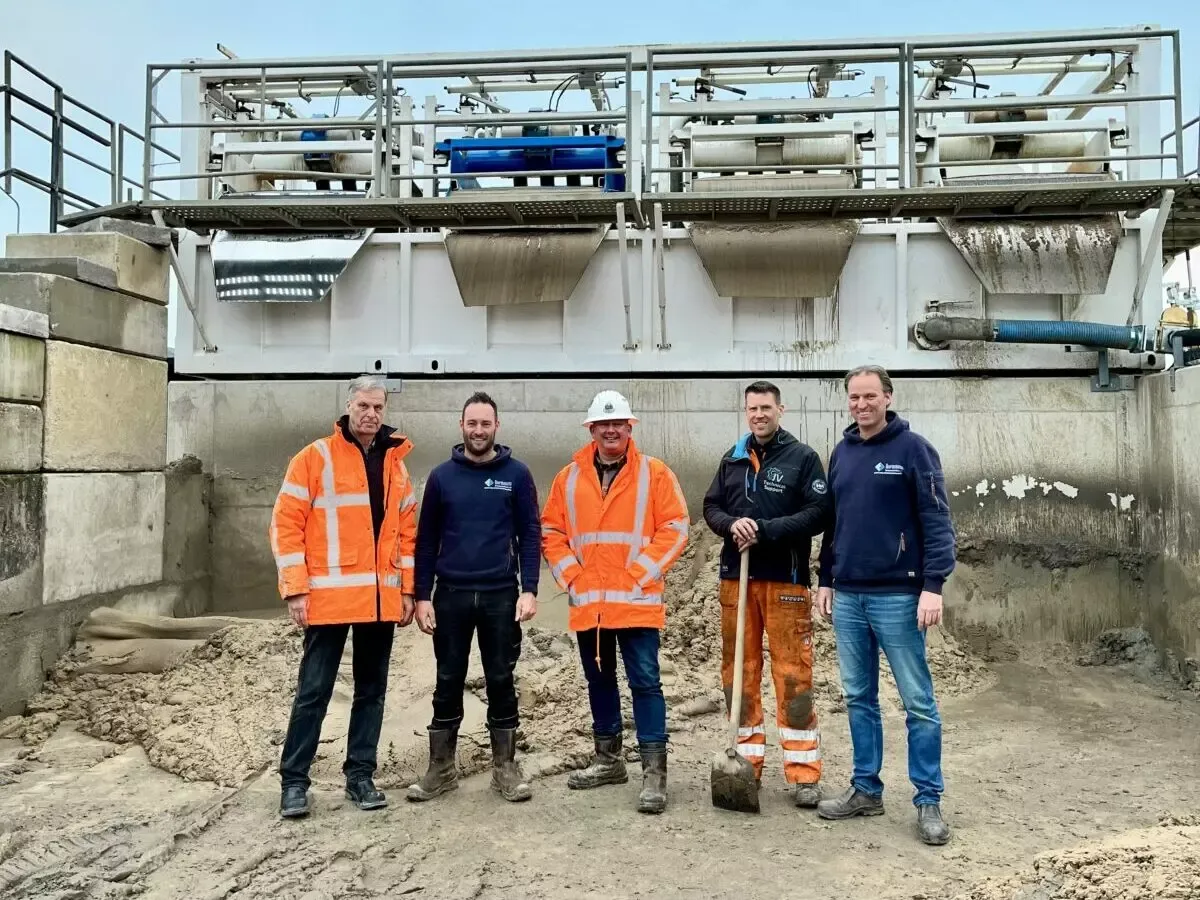
Transpose Recycling is run by three men: brothers Jonathan and Gersom, and their father Arend. The idea was born quite literally at the kitchen table. During a Christmas dinner, they asked themselves whether the current way of disposing of drilling fluid is still future-proof. “You can wait until disposal costs go up, or you can anticipate,” Arend says. “We have never been afraid to do things differently.”
The family comes from international transport. Arend’s company, also called Transpose, was known in that sector for clear values: always on time, always reachable, and always doing what you promise. That same work ethic runs straight through Transpose Recycling. “Recycling is one thing,” he continues. “But if you deliver clean drilling fluid in a dirty truck, you still don’t have a clean product. We focus on clean trucks, solid planning and careful handover.”
In this way, the Velema family’s logistics experience takes on a new role within a circular approach to horizontal drilling. A fitting match with the musical meaning of ‘transpose’: shifting a piece of music into a different key.
Knowledge of the HDD-industry
How does a transport family end up in the HDD sector? After many years working as a drill operator and site supervisor for various drilling companies, Gersom started his own tank transport business for drilling fluid. “I drive a truck with drilling fluid every day,” he says. “I see exactly where things go wrong: too much sand, incorrect mixing ratios, machines taking a beating. Then you know there is room for improvement.”
His brother adds a technical perspective. As a self-employed HDD mechanic, Jonathan knows the units inside out. “I know what they can do and when you need to intervene. That helps a lot when setting up a recycling installation that works the way a drilling crew needs it to.”
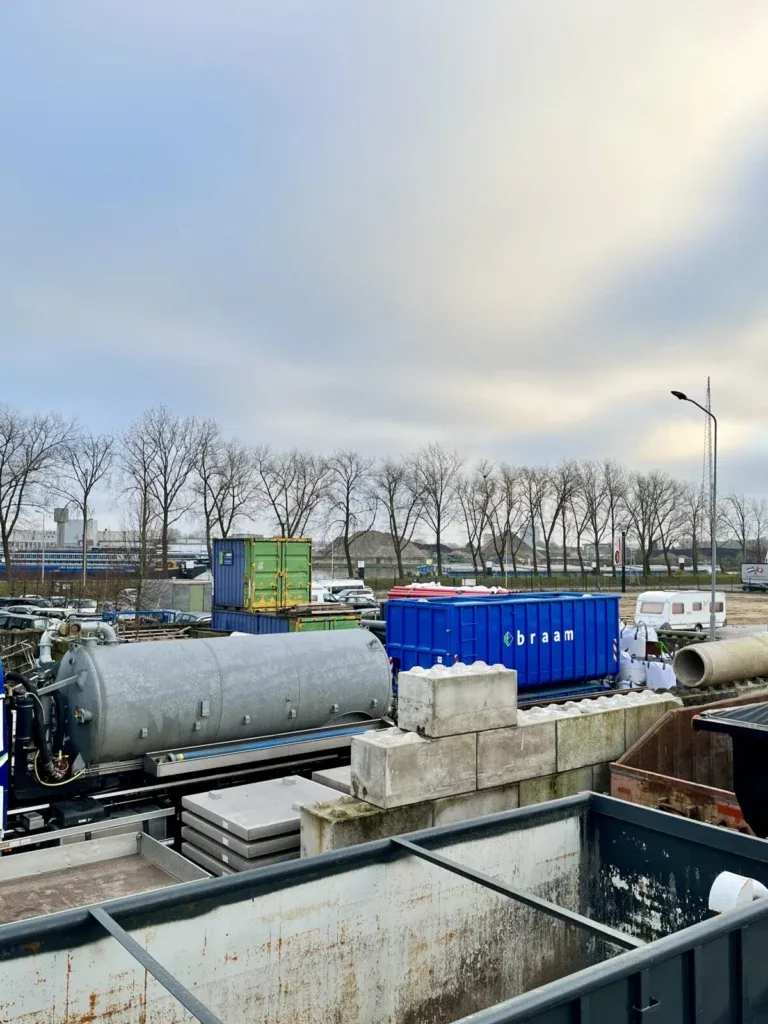
Transpose Recycling works together with earthworks company Braam on a single site that holds a permit for the storage of sand and soil. In the Netherlands, such permits are not easily granted and are essential for activities like drilling fluid desanding. The owner of Braam, a long-time friend of the family and also a shareholder, acts as a technical and operational sparring partner. “It’s a confirmation when someone who has known you for thirty years says: this isn’t just a good idea, this is needed in our industry,” Jonathan says.
Tightening regulations in drilling fluid
Every HDD project generates drilling fluid: a mixture of water, bentonite, polymer, sand, silt and drilling cuttings. Its handling is subject to legal requirements. Drilling fluid must be registered, analysed and either recycled or disposed of through approved channels. When this is not done carefully, it poses a risk to the entire industry.
This became clear in Germany a few years ago. Rising transport and disposal costs led to illegal practices in drilling fluid disposal, bringing the issue under close scrutiny. In some federal states, there was even discussion about banning the use of bentonite. The result was stricter controls and tighter regulation. Today, drilling contractors there, are experimenting with compact centrifuges on or near the jobsite. Technically effective, but organisationally demanding.
A distinctive approach
In the Netherlands, disposal is – for now – more cost-effective than installing a centrifuge on site. At the same time, environmental requirements from clients are increasing, and the need for certainty and correct documentation is growing. Some contractors recycle drilling fluid themselves, but this requires space and stable project volumes.
Especially when working with different types of drilling fluid, it is often more practical to have it collected and processed externally. There are currently no Dutch companies fully dedicated to HDD drilling fluid recycling for third parties. That is exactly the space where Transpose Recycling positions itself with a distinctive approach. By keeping everything within the sector – dirty drilling fluid in, clean drilling fluid out – a closed-loop system is created that is predictable, cost-effective and technically reliable for contractors.
Knowing what comes in and what goes out
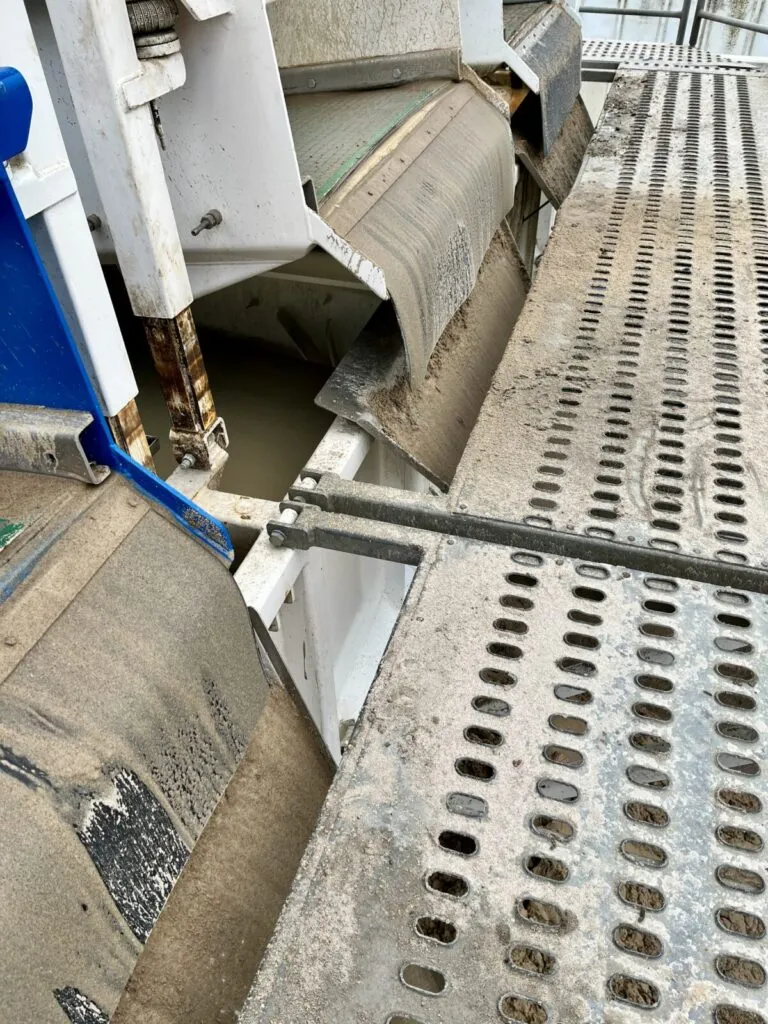
“We aim to create a circular drilling fluid flow within the HDD sector. This is not about product extraction or selling raw materials. Contractors deliver used drilling fluid and take back reusable fluid. That way, the material stays available without the need for new raw materials,” the brothers explain. “Desanding is therefore the core of our service. Through pre-screening, cyclone technology and fine separation, unwanted particles are removed and a stable, reusable slurry is created.”
That slurry has a direct impact on pump pressures, wear and drilling stability. For that reason, quality control is a constant focus throughout the entire recycling process. “You need to know exactly what you are taking in,” Jonathan says. “You don’t want to be surprised by drilling fluid from ground where there used to be a fuel station, or by soil that contains more clay than sand. In those cases, you can run for hours without achieving the right result. Ideally, we analyse the drilling fluid at the start of the drilling project. If that’s not possible, we do it immediately upon arrival, including full logbook registration.”
Transpose Recycling only desands drilling fluid that meets the environmental classification of residential, agriculture and nature. Drilling fluid outside this classification, or fluid that is technically unsuitable due to a high clay content, is sent to a certified processor. “Recycling only takes place when it can be done responsibly and demonstrably correctly, with the guarantee that the drilling fluid always remains below one percent sand.”
From test phase to positive feedback
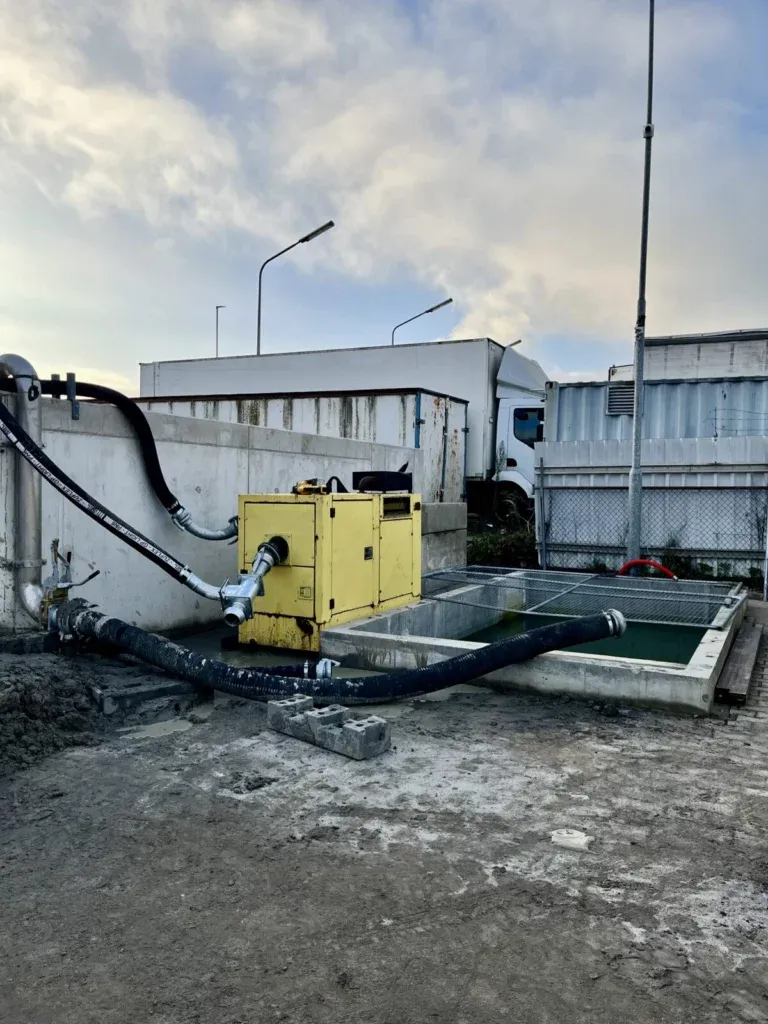
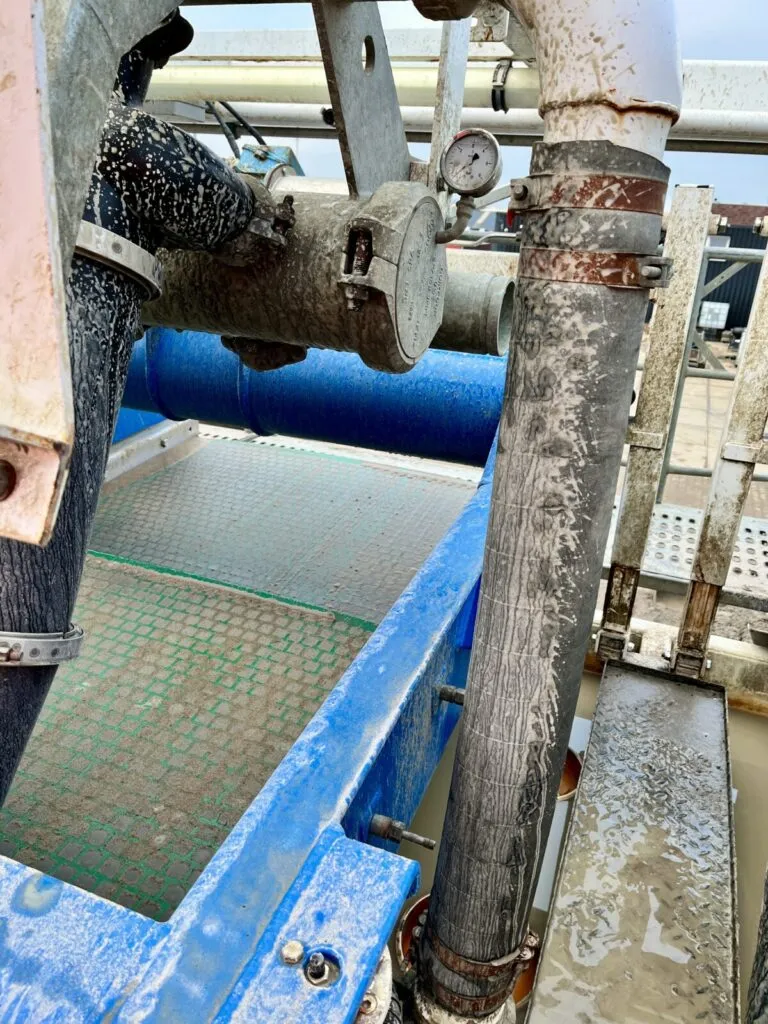
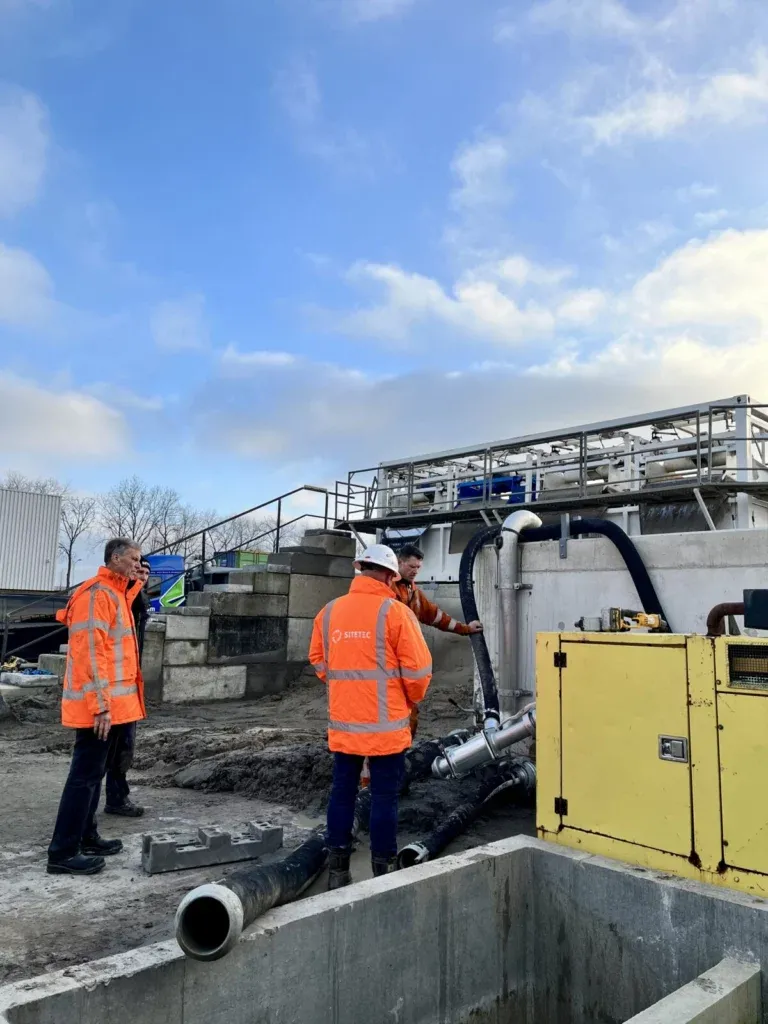
Starting up the operation required a full technical set-up: basins, pipework, storage for clean and dirty drilling fluid, and a recycling installation that had to be precisely tuned. Transpose Recycling deliberately chose a used SiteTec R2000 installation from 2008 – a unit fully ready for a second life.
During the initial tests, the system was operated at around 3 bar, a high pressure at which every component must perform optimally. Screens, cyclones and vibratory motors are configured accordingly. To date, more than 2,500 m³ has been processed, and the first batches of recycled drilling fluid have been returned to customers with positive feedback. The installation has proven capable of operating reliably even at a sand content as low as 0.25 percent.
Ambitions
At present, the team serves contractors within a 100-kilometre radius around Nijmegen and sees clear opportunities to further professionalise the operation. Two large basins on site are already in use for storing cleaned drilling fluid. A third basin – intended for drilling fluid that has not yet been analysed – is already planned. This additional step will provide greater flexibility when receiving return flows.
The team is also exploring how the sand removed from the drilling fluid can be further cleaned and reused, for example by partner Braam. By looking ahead to electric drive systems, the brothers aim to further reduce the environmental impact of the entire process.
In a sector where regulations are tightening and efficiency is becoming increasingly important, this is a development worth close attention. As an equipment builder, we are proud that our installation forms the foundation of initiatives like this that are moving the HDD sector forward.